

Maintaining a pristine and safe operational site is a fundamental priority for any large-scale commercial facility. In Britain, the demand for exceptional hygiene standards within distribution centres and manufacturing plants has never been higher.
Professional maintenance in these environments goes far beyond simple sweeping. It involves a suite of specialised techniques designed to meet the unique challenges of complex, high-traffic spaces.
Managers often grapple with persistent dust accumulation, contaminated floors, and the logistical difficulty of high-level cleaning. Finding a provider that offers flexible scheduling to minimise business disruption is crucial.
Engaging a top-tier specialist delivers measurable benefits. These include robust safety compliance, enhanced operational efficiency, and a direct boost to workplace productivity.
This article will explore the specific methods, equipment, and protocols that define excellence in this field. It will detail the advantages of partnering with experienced specialists who understand these intricate demands.
Key Takeaways
- Professional hygiene solutions are critical for safety and efficiency in large-scale storage and distribution facilities.
- Specialist maintenance encompasses advanced techniques tailored to complex commercial environments.
- Common challenges include controlling dust, deep cleaning floors, and accessing high areas without disrupting work.
- Effective services directly support regulatory compliance and improve overall site productivity.
- Partnering with an expert provider ensures these tasks are managed with precision and minimal fuss.
- The following sections will break down specific cleaning methodologies and the tangible benefits they offer.
Overview of Industrial Warehouse Cleaning
The upkeep of extensive commercial storage spaces requires a dedicated approach that addresses both visible and hidden contaminants. In Britain, this specialised maintenance goes beyond basic tidying to encompass comprehensive protocols for large-scale distribution centres and manufacturing plants.
This field differs markedly from standard commercial upkeep. It demands expertise in handling vast floor areas, elevated structures, complex racking systems, and busy loading zones. Each element presents unique challenges that generic approaches cannot solve effectively.
Professional warehouse cleaning involves systematic removal of dust, debris, and spillages from all operational zones. Key tasks include thorough floor maintenance, high-level dusting of structural elements, and sanitisation of storage racks and work surfaces. Prompt spill response and loading bay management are also crucial components.
These cleaning services are tailored to various sectors across the industry. Logistics hubs, food storage units, pharmaceutical distribution centres, and automotive parts facilities each have specific hygiene and compliance requirements that must be met.
Modern industrial cleaning integrates advanced techniques with specialised equipment and trained personnel. This combination ensures consistent results that support operational continuity and help facilities meet stringent regulatory standards.
The Importance of Facility Cleanliness in Industrial Environments
The state of a large-scale commercial site’s hygiene has profound implications that extend far beyond its appearance. It is a fundamental pillar supporting core business objectives.
A clean working environment directly safeguards staff health and safety. It minimises slip hazards from spills and removes airborne dust that can affect respiration. This proactive approach is crucial for regulatory compliance.
Furthermore, a well-kept site fosters a culture of pride and professionalism. Employees in a tidy environment are more likely to maintain good housekeeping standards themselves. This positive atmosphere directly supports morale and production efficiency.
The table below contrasts the outcomes of different maintenance standards:
| Aspect | A Well-Maintained Facility | A Neglected Environment |
|---|---|---|
| Accident Risk | Low; clear floors and prompt spill response. | High; debris and contamination create hazards. |
| Air Quality | Improved; regular dust removal. | Poor; airborne particles accumulate. |
| Staff Morale | High; promotes pride and discipline. | Low; can signal a lack of care. |
| Regulatory Standing | Supports compliance and passes audits. | Risks penalties and failed inspections. |
Ultimately, effective cleaning in a warehouse setting protects inventory and equipment. It ensures optimal lighting and prevents costly downtime from accidents or contamination issues.
Services and Techniques for In-Depth Cleaning
Expert maintenance teams employ a range of defined strategies to tackle the unique grime found in vast operational buildings. Their work spans from the ground up, utilising specialised approaches for every part of the facility.
Warehouse Floor Cleaning and Degreasing
Systematic floor cleaning forms the foundation of any thorough programme. Teams use professional-grade scrubbing equipment to remove ingrained dirt, oil spillages, and industrial residues.
Different surfaces like concrete, epoxy-coated, or resin floors each need specific chemical treatments. The process concludes with targeted degreasing and complete drying to restore a safe, slip-resistant surface.
High-Level and Detailed Dust Removal
Accumulated dust on overhead structures poses a constant challenge. It gathers on ceiling beams, high-level lighting, and the tops of storage racking.
Specialists use powered access platforms and extended-reach vacuum systems for this task. Static-dissipative tools safely capture particles without spreading them into the air.
This detailed cleaning extends to machinery surrounds and loading bay areas. The integrated approach ensures every part of the facility receives appropriate attention.
Safety and Compliance in Warehouse Environments
Navigating the complex web of health and safety regulations is a core responsibility for any facility manager. Professional maintenance providers play a vital role in ensuring a site meets all legal obligations.
Their expertise turns complex legislation into practical, daily protocols. This protects both personnel and the business from significant risk.
COSHH and ATEX Standards
The Control of Substances Hazardous to Health (COSHH) governs chemical use. Qualified teams assess hazards, select correct agents, and maintain strict handling records.
ATEX standards apply where explosive dust or vapours may exist. Specialists use certified equipment and methods to prevent ignition sources.
The table below outlines key frameworks:
| Regulatory Framework | Primary Focus | Key Requirement |
|---|---|---|
| COSHH | Chemical Safety | Risk assessment, safe storage, and staff training. |
| ATEX Directives | Explosive Atmospheres | Use of intrinsically safe equipment and procedures. |
| ISO 9001 | Quality Management | Documented processes and continuous improvement. |
| General Risk Assessment | Overall Workplace Safety | Identification and control of all potential hazards. |
Risk Management and Regular Audits
Systematic risk management identifies threats like working at height or confined spaces. Control measures are then implemented to mitigate them.
Regular audits, both internal and external, verify ongoing compliance. They check training logs, equipment certificates, and procedural adherence.
Documented evidence of compliance is not just for inspectors; it’s a blueprint for operational integrity.
This diligent approach shields a business from legal liabilities. It ensures maintenance activities enhance, rather than compromise, site safety.
Scheduling and Minimal Disruption Cleaning Solutions
The true mark of a professional maintenance provider lies in their ability to work seamlessly around a client’s core warehouse activities. Prioritising operational continuity, these specialists design their service to integrate without interrupting workflow.
This requires a deep understanding of a facility’s unique rhythms. Teams coordinate closely with management to identify optimal time windows for their work.
Flexible Shifts Including Nights and Weekends
To accommodate 24-hour operations, providers offer extensive scheduling flexibility. Teams are available during evenings, overnight, and weekends when sites are least busy.
This approach minimises disruption to goods receiving, picking, and dispatch. Planned shutdown periods or seasonal pauses are also utilised for more intensive projects.
Experienced crews employ zoned cleaning strategies. They sequence different areas, allowing normal operations to continue safely in adjacent sections.
They also work carefully around stored inventory and active machinery. Specialised techniques protect stock from contamination and prevent accidental damage during the maintenance time.
This work ethic extends to emergency response for spills or urgent pre-inspection needs. The goal is always to maintain business continuity while delivering thorough results.
Key Benefits of a Clean Industrial Facility
Regular, professional upkeep transforms a commercial site from a potential liability into a strategic asset. The return on this investment is visible across multiple areas of operation.
Enhanced workplace safety is the foremost advantage. A tidy environment drastically cuts accident rates by removing slip and trip hazards. It also keeps emergency exits and routes completely clear.
Productivity receives a direct boost. Staff work more efficiently in organised, clutter-free zones. Clear walkways and workstations prevent delays, supporting smoother production flows.
Valuable stock and machinery are protected. Consistent cleaning stops dust from contaminating sensitive goods. It also prevents abrasive particles from damaging expensive equipment, extending its life.
A pristine warehouse makes a powerful statement about a business. It impresses clients and auditors, building a reputation for excellence. This preventative approach is cost-effective, avoiding expensive emergency deep cleans.
Understanding Operational Efficiency in Industrial Cleaning
A systematic approach to site hygiene directly fuels smoother workflows and minimises interruptions. In large-scale facilities, professional maintenance is a strategic asset that supports continuous output.
Streamlined Processes and Reduced Downtime
Expert providers implement documented procedures and standardised methods. They conduct initial assessments to understand layout and operational patterns.
This allows for customised schedules that align with production cycles. Trained teams work independently, requiring minimal supervision from site managers.
Reduced downtime is achieved through proactive strategies. Prompt spill response and regular preventative maintenance prevent small issues from escalating.
Scheduled deep cleaning during planned shutdowns avoids disrupting core activities. This careful planning protects valuable time and resources.
Efficient maintenance operations contribute to smoother material flow in a warehouse setting. Clear pathways for handling equipment prevent delays and accidents.
Clean lighting ensures optimal visibility, while well-maintained floors prevent damage to vehicles. These factors collectively enhance overall productivity.
The service itself is designed for efficiency. Advanced equipment completes tasks faster, saving management time and meeting deadlines reliably.
Quality management systems ensure results are consistent, eliminating the need for corrective work. Well-executed upkeep becomes an invisible enabler of peak performance.
Enhancing Workplace Safety Through Rigorous Cleaning
Comprehensive cleaning programmes serve as the first line of defence against workplace injuries. They transform a busy warehouse into a secure environment where staff can work with confidence.
Slip and trip hazards, among the most common causes of accidents, are drastically reduced. Systematic cleaning promptly removes spillages and maintains dry, debris-free walkways.
Air quality improves significantly when dust is removed from surfaces and ventilation systems. This prevents respiratory irritation and protects long-term health for personnel.
Proper upkeep eliminates grease and oil residues from floors, especially in high-traffic zones. Clean lighting fixtures and windows also ensure optimal visibility for safe operations.
Rigorous hygiene protocols combat bacterial and fungal growth in washrooms and damp areas. This prevents contamination that could affect both staff and stored products.
Safety-focused cleaning extends to waste management and regular sanitisation of high-touch surfaces. It maintains clear emergency exits and removes combustible dust accumulations, further mitigating risk. This holistic approach creates a fundamentally safer environment, directly supporting organisational safety objectives.
Utilising Advanced Equipment for Thorough Cleaning
Achieving a comprehensive clean in vast operational spaces demands more than just mops and buckets. Specialist providers deploy an arsenal of advanced equipment designed for scale and efficiency.
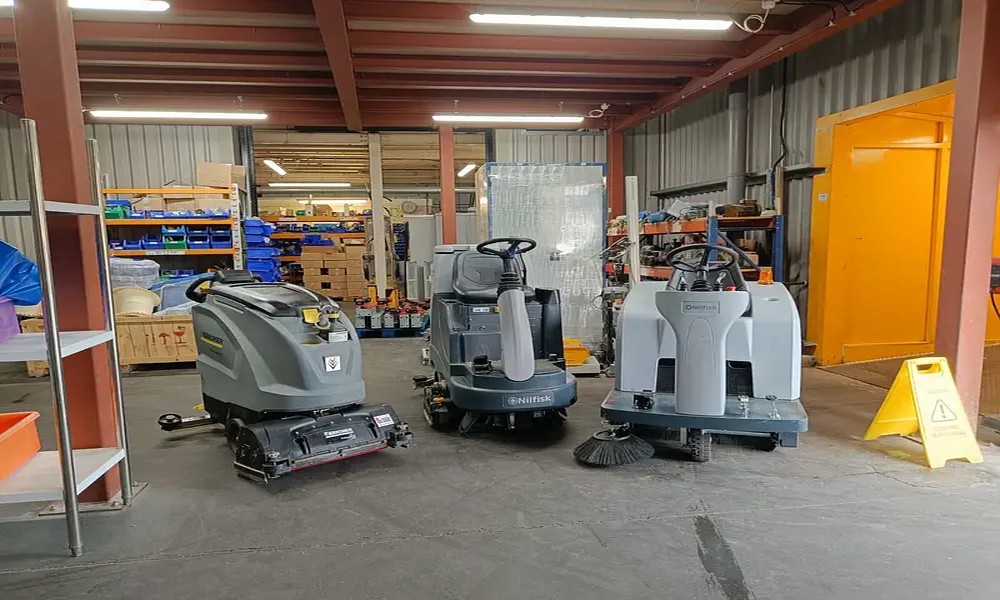
Industrial-grade floor scrubbers are central to this process. These powerful machinery units feature large cleaning paths and integrated water recovery systems. They deliver a truly deep clean for expansive floors, scrubbing and drying surfaces in one pass.
For elevated areas, powered access platforms and scissor lifts enable safe work at height. This allows technicians to reach overhead beams, lighting, and high-level racking safely and effectively.
Controlling particulate matter is critical. HEPA-filtered extraction systems capture fine dust during operations, preventing it from recirculating. For external zones, adjustable pressure washers tackle ingrained dirt without damaging surfaces.
The toolkit also includes specialised items like microfibre systems and anti-static tools. These are designed for sensitive environments where spreading contaminants or static discharge poses a risk.
Leading providers invest heavily in maintaining this equipment and training certified operators. This commitment ensures reliable performance, upholds safety standards, and justifies the professional approach to facility cleaning.
Industrial Warehouse Cleaning Services UK: Ensuring Quality and Efficiency
Excellence in facility upkeep is not accidental. It is engineered through systematic processes and a culture of continuous improvement.
Leading providers demonstrate this commitment through internationally recognised quality management systems. Certification to ISO9001:2015 shows they have robust procedures to meet all client requirements.
This systematic approach ensures consistent standards. Documented methods and regular inspections maintain results, regardless of a site’s size or complexity.
Comprehensive training equips teams with necessary skills. Ongoing development ensures they can deliver exceptional results in demanding environments.
Efficiency stems from optimised work methods and strategic scheduling. The right equipment and planning maximise productivity while minimising disruption.
Clients receive clear communication and transparent reporting. This accountability builds confidence in the service delivery and represents strong value.
Ultimately, professional cleaning services combine experienced management with a client-focused culture. The goal is to exceed expectations while ensuring reliability and cost-effectiveness.
Integrated Cleaning Strategies for Modern Industrial Sites
Leading-edge maintenance moves beyond separate tasks to deliver a synchronised programme for the entire premises. This integrated strategy treats a site as one interconnected system.
It coordinates routine upkeep, periodic deep cleaning, and specialist technical work. A single provider manages all these elements across diverse zones.
Modern facilities often mix production areas, storage zones, offices, and external yards. An integrated plan applies the right methods to each space seamlessly.
This approach simplifies contractor management dramatically. It ensures consistent standards everywhere and avoids scheduling conflicts.
Accountability is unified through one point of contact. The strategy also incorporates preventative maintenance to protect assets and extend equipment life.
Comprehensive programmes include documented schedules and performance metrics. They evolve to meet changing operational priorities, delivering true cost-effectiveness.
Partnering with Leading Experts like Crystal Cleaning Servicing Ltd
In today’s competitive landscape, aligning with a proven expert offers more than just a service-it delivers a partnership. This collaborative approach is fundamental for facilities seeking reliable, high-standard upkeep.
Leading providers build excellent reputations through consistent results. Client repeat business is a powerful testament to their experience, reliability, and commitment to customer service.
A true partnership differs markedly from a simple contractor arrangement. It focuses on shared goals and long-term facility excellence rather than isolated tasks.
| Aspect | Transactional Service | Strategic Partnership |
|---|---|---|
| Focus | Completing specific cleaning tasks | Achieving holistic operational goals |
| Communication | Minimal, often issue-based | Regular, collaborative planning |
| Outcome | Short-term cleanliness | Sustained efficiency and quality |
Established company credentials, like those of Crystal Cleaning Servicing Ltd, provide clear evidence of capability. Certifications and documented case studies demonstrate a proven track record.
Such partners invest heavily in staff development and technological innovation. This ensures cleaning services continuously improve, directly benefiting the client’s business.
Ultimately, this deep experience and partnership model translate into stability and superior outcomes for any facility.
Collaborating with a Trusted Name: Crystal Group and Their Commitment to Excellence
Peace of mind comes from knowing your maintenance provider has a proven history of excellence. Selecting a partner with a strong reputation is crucial for any facility manager.
Trusted company names have earned their standing through consistent performance. They build confidence by delivering on promises across diverse projects.
These organisations distinguish themselves with transparent practices. Clear communication and responsive customer support ensure standards are always met.
Commitment to excellence shows in their investment in people. They develop skilled teams through continuous training and professional development.
Rigorous quality control systems and regular audits maintain high standards. Professional accreditations provide independent verification of their capabilities.
Working with an established provider like Crystal Group reduces operational risk. It eliminates concerns about reliability for warehouse cleaning needs.
Their experience allows them to understand specific client requirements deeply. They adapt their services as those needs evolve over time.
This partnership approach transforms the relationship. It moves beyond basic tasks to strategic collaboration for long-term facility excellence.
Such providers offer nationwide coverage with local teams. This ensures consistent services across multiple locations without supervision.
Their proven track record and customer-focused methods deliver real value. This experience provides the confidence every facility manager seeks.
Customised Solutions for Varied Industrial Environments
No two facilities are identical, and neither should their maintenance programme be. Effective providers tailor their approach to the specific sector and unique operational requirements of each site.
This ensures protocols address the right contaminants in the right areas. A logistics hub has different needs to a manufacturing plant or a food storage unit.
Factory Cleaning and Specialised Areas
The term ‘factory cleaning‘ covers a vast range of environments. Each presents distinct challenges that demand specialised knowledge.
- Food production facilities need stringent hygiene protocols to prevent contamination.
- Pharmaceutical factory environments demand absolute contamination control.
- Chemical plants require expertise in handling hazardous substances safely.
Specialised spaces within these sites, such as cleanrooms or laboratories, need certified agents and trained personnel. The approach for these critical areas is meticulously planned.
Tailored Contract Cleaning Plans
Customisation begins with a comprehensive site assessment. Experts evaluate the layout, pinpoint challenges, and understand operational schedules.
This detailed analysis allows for the creation of a precise service specification. The plan will define tasks, frequency, methods, and even reporting formats.
True customisation extends to scheduling and adapting to seasonal changes. It ensures the cleaning supports the client’s workflow without disruption.
This tailored process guarantees that all specific site requirements are met efficiently and consistently.
Case Studies and Client Success Stories Across the UK
Client testimonials from various sectors highlight the measurable results achieved through dedicated cleaning services. These real-world examples provide compelling evidence of their impact.
A Midlands-based automotive factory reported a dramatic improvement in audit scores. Their site manager noted a “huge difference in staff morale and visitor impressions” after partnering with a specialist provider.
“The team is professional and thorough. They’ve transformed our warehouse into a space we’re proud to show clients.”
Businesses across Birmingham, Leicester, and Northampton share similar success stories. They cite reliable service, consistent quality, and excellent value as key benefits.
These partnerships often begin with an assessment of specific site challenges. The provider then implements a tailored plan, leading to long-term relationships.
For multi-location operations, providers can service several sites across the UK with coordinated teams. This ensures uniform standards without constant supervision.
The overall customer experience is marked by responsive communication and a personal touch. This peace of mind allows business leaders to focus on core operations, confident their facility is in expert hands.
Conclusion
Transforming a busy facility into a model of efficiency and safety requires a proven, professional approach. As outlined, expert warehouse cleaning services represent a strategic investment far beyond basic tidying.
Specialist industrial cleaning delivers complete, tailored solutions. A skilled team uses advanced equipment to meet specific site requirements. This enhances productivity, protects stock, and safeguards staff.
For operations seeking improvement, the path forward is clear. Contact a professional provider for a nationwide assessment. They will discuss your needs and demonstrate how quality cleaning services offer genuine value for money.