
Privacy is one of the most common reasons people change their garden fencing. A low boundary becomes a taller one. Open fencing is replaced with solid panels. Trellis disappears. Gaps are closed. The neighbour’s upstairs window finally vanishes from view.
Then, occasionally, the homeowner stands back and realises something else has disappeared with it.
Half the afternoon light.
A useful view.
Airflow through the garden.
Or simply the sense of space that made a fairly modest garden feel bigger than it actually was.
I’ve never subscribed to the idea that the most private garden is automatically the best garden. Boundaries have several jobs to do, and privacy is only one of them.
Get too focused on blocking everything out and it is surprisingly easy to start blocking yourself in.
Six feet of solid fencing isn’t the answer to everything
There is an understandable logic to privacy fencing.
If somebody can see over a four-foot boundary, make it taller. If they can see through it, make it solid.
Problem solved.
Except gardens don’t work in isolation.
The fence affects light, wind, planting, views and how enclosed the space feels. Its height and construction can even change the conditions immediately around it.
I’ve worked around enough different gardens to know that the same fence can feel completely different from one property to another.
A tall solid boundary around a large garden might barely register. Put something similar around a narrow terrace and it can dominate the entire space.
Orientation matters too.
If the fence sits between the garden and useful sunlight, increasing its height can cast a much larger shadow than the homeowner anticipated. That matters particularly during spring and autumn when the sun sits lower.
Before increasing the height of a boundary, I would always spend some time watching what the sun actually does across the garden.
Not just at midday.
Look in the morning and again later in the afternoon.
You may be surprised how much one particular boundary influences it.
Sometimes the view is worth keeping
Privacy isn’t always an all-or-nothing decision.
Gardens on the outskirts of towns and villages can have quite open aspects. A boundary might overlook fields, trees or distant countryside while another side faces neighbouring houses.
Why treat both sides identically?
I’ve never understood the obsession with automatically putting the same fencing around every metre of a garden.
The boundary should suit what is happening around it.
You might want substantial screening beside a patio where people sit during summer, but a lower or more open treatment elsewhere. One section might need to screen neighbouring windows while another benefits from retaining an open outlook.
Selective privacy can produce a much nicer garden than simply surrounding the property with the tallest solid fence available.
It can also make smaller gardens feel considerably less boxed in.
Wind needs somewhere to go
This is the part people often overlook.
A solid fence catches wind.
That’s obvious enough when you think about it, but it isn’t always considered when people choose fencing primarily for privacy.
Wind hitting an open structure can pass through it to some degree. Wind hitting a solid panel has to travel around or over it, while the fence itself takes the load.
That force is transferred through rails, fixings, panels and eventually into the posts and their foundations.
The taller and more exposed the boundary, the more significant this becomes.
Around Barnsley and elsewhere in South Yorkshire, there is enormous variation between sites. A sheltered garden surrounded by buildings has very different exposure from a property backing onto open land.
There are also gardens where houses themselves create problems.
I’ve seen surprisingly strong wind funnelled through relatively narrow gaps between buildings. One section of fencing can take far more punishment than another section only a few metres away.
This doesn’t mean solid privacy fencing is a bad idea.
It means it needs to be installed for the conditions it will face.
Post specification, footing depth, fence height and construction all matter. Simply putting taller panels onto an existing structure without considering the extra wind loading can be asking for trouble.
The fence may look fantastic on a calm Saturday afternoon.
February is usually a more useful test.
Plants need light and air as well
Garden design and fencing are often treated as separate decisions.
They shouldn’t be.
If you have established beds along a boundary and then significantly increase the height or density of that boundary, the growing conditions can change.
Areas that previously received direct light may spend much longer in shade. Air movement can reduce. Soil can stay damp for longer in some positions.
Some plants won’t care.
Others will.
This becomes particularly noticeable where people create very enclosed spaces around patios and seating areas. Privacy improves immediately, but the microclimate changes too.
There are ways around this.
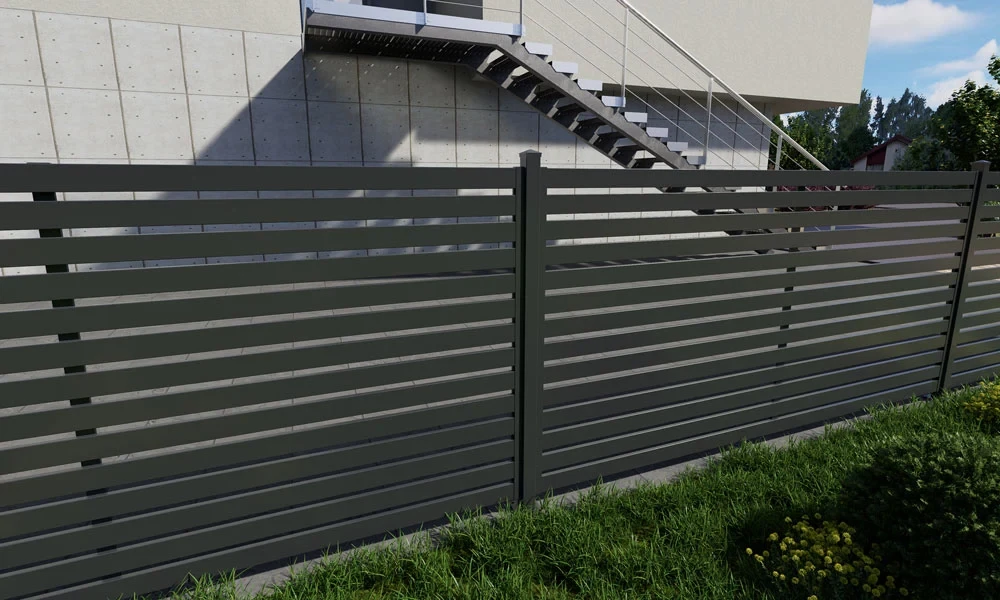
Trellis can provide additional screening without creating a completely solid wall. Planting can soften sightlines. Slatted designs can create varying degrees of screening while allowing some light and air through.
The right answer depends on what you’re trying to hide and from where.
That last part is important.
Work out the actual sightline
A lot of privacy work begins with a vague statement:
“The neighbours can see into our garden.”
Fine. From where?
An upstairs bedroom?
Their kitchen?
A raised patio?
A path running beside the boundary?
The answer should influence the solution.
If the problem is one particular line of sight towards a seating area, you may not need to alter the entire boundary at all.
A carefully positioned screen, planting or change in one section of fencing might solve it.
Conversely, increasing a fence by a small amount may achieve nothing if the overlooking position is substantially higher.
This is where I’d rather spend ten minutes looking at the problem than immediately start discussing panels.
Stand where you actually want privacy.
Look towards the source of the overlooking.
Then work backwards.
It sounds basic, but it prevents a lot of unnecessary work.
Don’t create a security problem while solving a privacy problem
Privacy and security often get bundled together as though they are the same thing.
They aren’t always.
A secure boundary can help discourage casual access to a garden, and properly fitted gates and fencing are useful parts of home security.
But complete visual screening has another effect.
It can prevent people outside the property seeing what is happening inside.
That can be desirable for everyday privacy, but there is a balance to strike.
A badly designed front boundary, for example, can provide concealment as well as privacy. Side access is another area worth thinking about carefully, particularly around garden gates.
The gate itself might be substantial, but the details matter.
Can somebody easily reach the latch from outside?
Are the hinges accessible?
Does the gate actually close properly?
Has the supporting post moved?
Is there a simple route around it?
A tall fence with a poorly secured gate isn’t a particularly clever security system.
I would rather see the whole boundary considered together than one enormous panel installed because somebody equated height with security.
Your neighbour still exists on the other side
This sounds flippant, but neighbour relationships deserve consideration.
Boundary work can become surprisingly contentious.
One homeowner sees a useful privacy improvement. The person next door sees lost sunlight, a more enclosed garden or an imposing structure suddenly appearing beside their patio.
Before making substantial changes, establish exactly where the boundary is and check whether there are any relevant restrictions affecting what you intend to build.
Don’t assume that because an existing fence is yours, you can automatically replace it with anything you like at any height.
Planning rules and property-specific restrictions can matter.
There is also a simpler consideration.
Talk to people.
You don’t necessarily need your neighbour to design your garden for you, but telling them what you’re considering before work begins can prevent a lot of unnecessary friction.
I’ve always thought a five-minute conversation over a fence is preferable to a five-month argument about one.
Composite changes maintenance, not the basic design problem
People sometimes approach composite fencing because they want privacy without the ongoing maintenance associated with timber.
That’s a perfectly reasonable objective.
Composite can provide a clean, consistent appearance and substantially reduce some routine maintenance requirements.
But changing material doesn’t remove the basic decisions.
How high should the boundary be?
How solid?
What wind exposure does it face?
What will it do to the light?
How are the posts supported?
What happens at changes in ground level?
What does it look like from inside the garden?
A premium material won’t rescue a poorly considered boundary.
That applies to timber as well.
I would rather install a straightforward fence that suits the garden than an expensive one that solves the wrong problem.
Partial screening is underrated
One of the most useful questions to ask is whether you actually need complete privacy.
Often, people don’t.
They want enough privacy to eat outside without feeling watched.
They want to sit in a particular corner without directly facing another property.
They want children to play in the garden without being visible from the pavement.
They want the hot tub screened.
They don’t necessarily need every inch of the property hidden.
Once you define the problem that narrowly, the options improve.
Different boundary heights can work where appropriate. Trellis and planting can interrupt views. Screens can protect specific seating areas. A combination of fencing and vegetation can feel much softer than a continuous wall of solid panels.
Even the position of furniture can make a difference.
The objective should be creating a garden that feels private enough to enjoy, not winning a competition to see who can block the most sky.
A garden should still feel like somewhere you want to be
I’ve seen expensive boundaries that were technically excellent and completely wrong for the garden.
Perfectly straight.
Solid posts.
Good materials.
Neat workmanship.
And the garden felt like a compound afterwards.
That isn’t an installation problem. It’s a decision made before the first post hole was dug.
Privacy matters. For some properties, it matters enormously. Modern developments can put gardens close together, older terraces can have multiple properties overlooking the same space, and outdoor living means people understandably want their gardens to feel personal.
But there is a point where solving one problem starts creating three others.
Before making a boundary taller or more solid, spend some time in the garden.
Look at where people can actually see you.
Look at where the light comes from.
Notice which direction the wind hits.
Decide which views you dislike and which ones you’d miss.
Then choose the fencing.
Once a six-foot solid boundary is standing in front of you, it is a little late to discover that the thing you wanted privacy from wasn’t actually the thing you valued most about the garden.