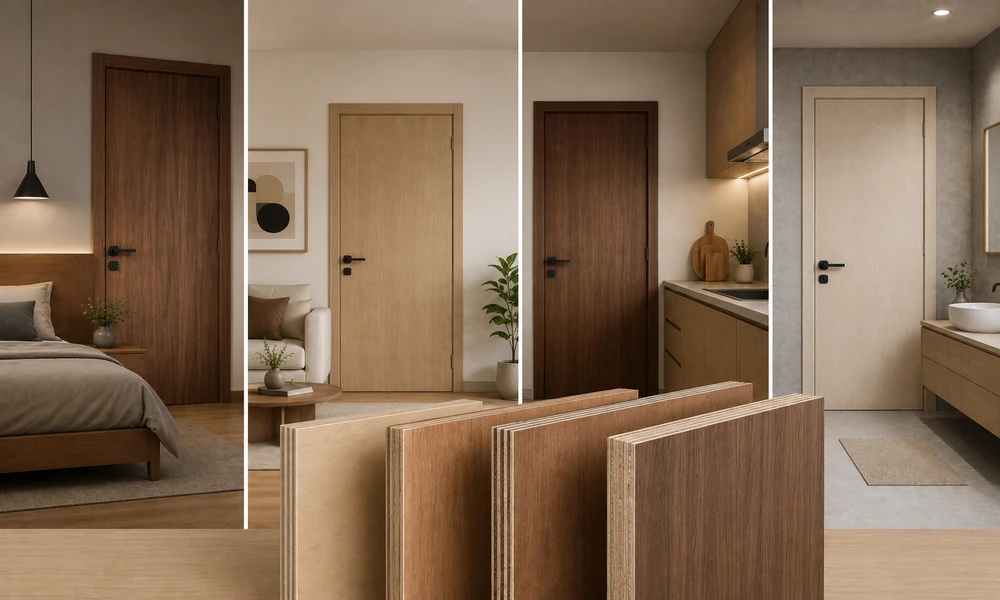

Selecting the right type of plywood becomes an important decision for architects, interior designers and homeowners when they are planning a project for furniture, wardrobes, and kitchen cabinets or any other interior applications of plywood. The moisture levels within a home are different in different places; some places are wet, some may experience heavy moisture, there is humidity in some areas, and some may be dry. So it is understandable that one type of plywood is not practical for all kinds of applications.
Choosing the right type of plywood depends on factors like the room, the application type and the type of atmosphere the plywood will be exposed to. Here’s a quick guide to help you decide on the right plywood for each room type.
1. Plywood for Bedrooms
Bedrooms are in the innermost parts of most homes, and they are generally dry with very low or no moisture exposure. Therefore, they are suitable for the best type of plywood, such as wardrobes, beds, study units, and dressing tables.
Bedrooms and storage need plywood that has good strength and stability with a smooth surface for various finishes like paint, veneers and laminates.
2. Plywood for Living Rooms
Living rooms typically require plywood that offers a balance between strength, stability, and appearance. TV units, bookshelves, display cabinets, partitions, and storage furniture may experience regular use and varying loads.
For living rooms, you need plywood that has both aesthetics and dimensional stability, as it will decide the overall look of your living room and also needs to last longer; you’ll need plywood for the TV units, bookshelves, storage furniture, dining tables, cabinets and partitions.
When selecting plywood for applications, you need to consider the weight these applications will carry, therefore the best type of plywood to choose is a dense-core plywood. You can either choose a boiling-waterproof plywood or a moisture-resistant plywood made of Hardwood cores.
3. Plywood for Kitchens
The kitchen is the most used area of the home and is prone to heavy moisture. There are
spills, splashes of water, steam from cooking, and spills during cleaning; the humidity can affect the plywood cabinets above the gas stoves, storage cabinets and under the sink.
The best plywood for kitchen cabinets is generally boiling-waterproof plywood, as it will protect your kitchen cabinets for years, as they are exposed to frequent moisture. You also need to do the edge banding and joint sealing to protect the exposed edges from water.
The right plywood selection will lead to saving expenses caused by warping, swelling or delamination.
4. Plywood for Bathrooms and Utility Areas
Bathrooms are higher in humidity and wetter than most other rooms in your house; laundry and utility areas may also be affected due to water exposure, use of cleaning products and changes in humidity.
For these areas, plywood that is resistant to moisture, like MR plywood, is the right choice. You can also go for boiling waterproof plywood depending on the level of exposure at the location.
However, just selecting the plywood is not enough; you also need to ensure that the edge bending is done, there is proper surface protection also enough ventilation and proper installation is done for the long-term performance of the plywood.
5. Plywood for Study Rooms and Home Offices
The study rooms and the home offices have lower moisture content, but the furniture required in these areas may require good load-bearing capacity and sturdiness. The type of applications in this room may include storage cabinets,s bookshelves, and study desks, which means you need to select a plywood that will retain its shape despite the loads under regular usage.
When selecting the plywood for these areas, you need to consider the following factors: the thickness of the plywood usually must be 18 mm or more, the structural strength, durability, and load capacity. Choosing the right thickness and the support of the plywood will ensure that the furniture will last without bending or sagging.
6. Consider the Application Along With the Room
Room usage provides a useful starting point, but the exact location of the furniture matters just as much. For example, a kitchen cabinet installed directly below a sink faces much greater moisture exposure than a cabinet placed away from water sources.
The place where the furniture will be installed is the first and foremost consideration when deciding upon the plywood. For instance, a cabinet installed directly underneath the sink will be exposed to constant moisture and occasionally plumbing issues may cause leaks, which can lead to sagging of the plywood.
Therefore, before purchasing the plywood, check the place of installation, the plywood grade required, the thickness of the plywood, and the type of application, load requirements, and surface finish. Selecting plywood based on these factors will ensure that the application is durable and long-lasting.
Conclusion
The right plywood should match both the room and the purpose for which it is being used. Bedrooms and living rooms generally need stable, high-quality interior plywood, while kitchens, bathrooms, and utility areas require greater resistance to moisture.
By considering the room environment, application, expected load, and moisture exposure before making a selection, you can choose plywood that offers better durability, stability, and long-term performance. A well-informed choice at the beginning can help protect your furniture and interiors for years to come.