
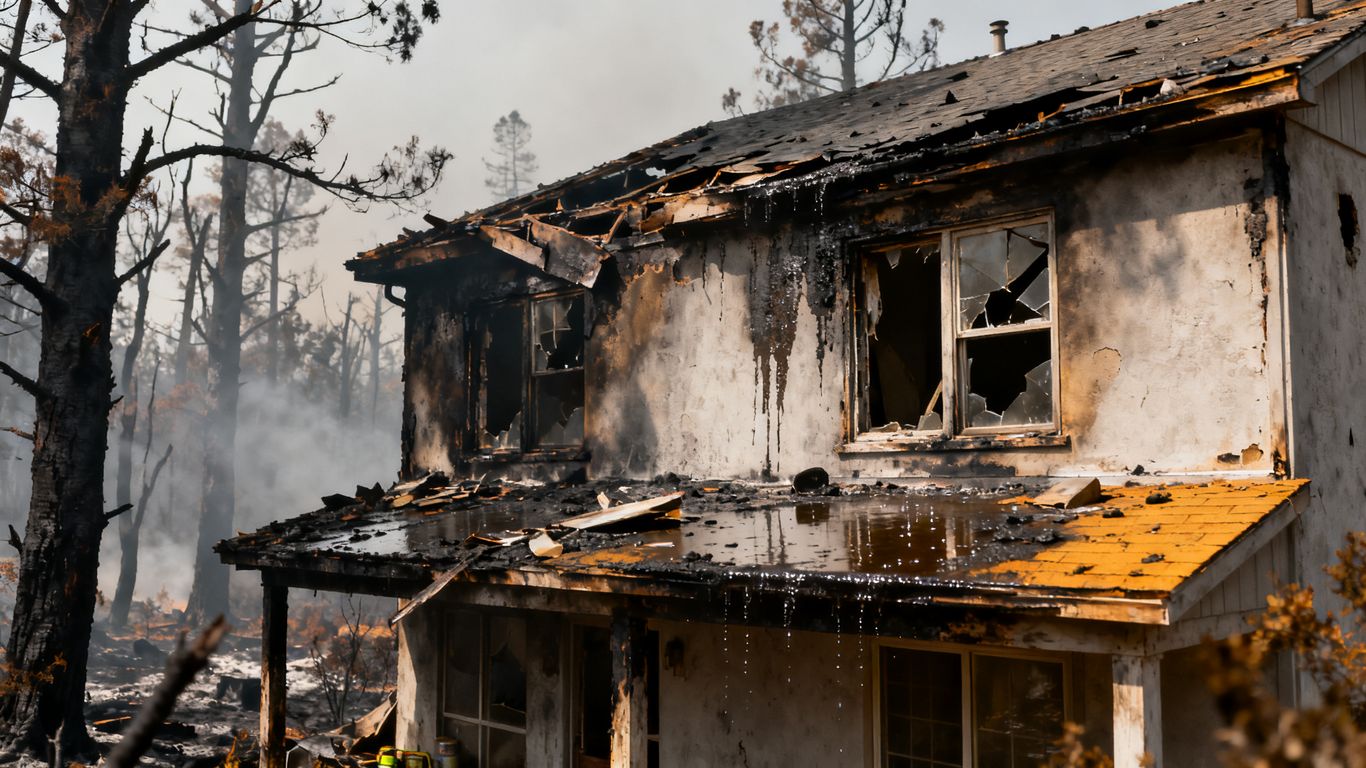

A home does not have to burn to suffer serious wildfire damage. Radiant heat, wind-driven embers, smoke, and firefighting activity can affect materials and systems behind surfaces that still look normal. This hidden wildfire damage may not become apparent until days or weeks later, when doors stick, odors persist, or moisture begins moving through the structure.
Heat stress on framing, masonry, windows, and foundations
Extreme heat can dry and weaken wood framing, distort metal components, crack masonry, and damage window assemblies. Concrete may appear sound while experiencing internal cracking or strength loss, and rapid heating followed by cooling can place additional stress on foundations and walls. A clean exterior therefore cannot establish that the underlying structure is unaffected.
Wind-driven embers entering vents, roofs, and wall cavities
Embers can travel into attic vents, roof edges, soffits, gutters, and other small openings. Once inside, they may ignite insulation, framing, stored materials, or debris in concealed cavities without producing an immediately visible exterior fire. Blocked or damaged vents can also reduce the normal movement of air through the attic.
Damage caused by firefighting water, foam, and debris
Fire suppression can introduce substantial water into roofs, walls, floors, and utility spaces. Foam, ash, and debris may settle into areas that are difficult to clean, while broken roofing or windows can leave new paths for rain. A post-fire structural inspection can help distinguish surface damage from problems affecting safety and long-term performance.
Why a home can appear intact while losing structural integrity
Many structural components are enclosed by drywall, siding, insulation, or roofing. Those coverings can hide burned connections, heat-stressed fasteners, warped framing, and moisture trapped after suppression efforts. An intact shell is not proof of a safe home, so occupancy decisions should follow a cautious assessment rather than a visual glance from the street.
Structural damage that may be difficult to detect
Structural damage after a wildfire is not always dramatic. Heat can affect connections and materials unevenly, leaving one part of a home weakened while neighboring surfaces remain recognizable. The building damage assessment guidance describes why fire, smoke, heat, and water must all be considered during a post-fire review.
Weakened roof trusses, rafters, and attic connections
Roof framing can be exposed to heat through damaged shingles, vents, soffits, or nearby burning vegetation. Trusses and rafters may warp, lose section, or pull away from connectors, and fasteners can be affected even when the roof plane has not collapsed. Attic access should be left to qualified personnel when the roof or ceiling shows instability.
Cracked foundations, chimneys, walls, and load-bearing elements
Heat can cause masonry to crack, spall, or separate at joints. Foundations and load-bearing walls may also show new fractures, displacement, or changes around openings, especially where water and rapid temperature changes followed the fire. A crack that appears minor should be recorded and evaluated in context rather than patched immediately.
Warped doors, shifted frames, and signs of movement
Doors that no longer close, windows that bind, and frames that appear out of square can signal heat distortion or structural movement. Gaps around trim, sloping floors, displaced cabinets, and fresh drywall cracks provide additional clues. These signs do not identify the cause by themselves, but they warrant a closer inspection before repairs conceal them.
When heat damage requires an engineer’s evaluation
A structural engineer is appropriate when the home has suffered prolonged heat exposure, visible movement, roof damage, masonry cracking, or uncertainty about load-bearing components. The engineer can assess conditions that a homeowner cannot safely reach or interpret. Evaluation is particularly important before reoccupying areas beneath damaged roofs or near compromised walls.
Hidden smoke, soot, and ash contamination
Smoke can affect a home that was never directly touched by flames. Fine particles move through openings and air pathways, settle on surfaces, and may remain in materials long after the outdoor air clears. Smoke-related property damage can also create difficult insurance questions, making careful documentation useful from the beginning.
How smoke travels through HVAC systems and concealed spaces
Smoke enters through windows, doors, vents, roof openings, and gaps around utility penetrations. HVAC equipment can distribute particles through return air pathways and ductwork, while pressure changes move contamination into wall cavities, closets, and ceiling spaces. Filters should not be treated as proof that the rest of the system is clean.
Residue on insulation, wiring, cabinets, and interior finishes
Soot and ash can coat insulation, wiring, cabinet interiors, walls, ceilings, flooring, and unfinished framing. Porous materials may absorb odor and residue rather than merely hold it on the surface, and aggressive cleaning can spread particles or damage finishes. Items that look usable may still need professional assessment before they are returned to living areas.
Persistent odors versus evidence of ongoing contamination
Odor is a useful warning sign, but it does not measure the amount or location of contamination. A lingering smell may come from porous contents, insulation, ductwork, or hidden cavities, while a low-odor space may still contain fine residue. The smoke damage insurance discussion provides broader context for why smoke can create property and health concerns beyond the burn area.
Health concerns linked to fine particles and toxic residues
Wildfire residue can irritate the eyes, skin, and respiratory system, particularly for children, older adults, and people with existing breathing conditions. Ash from burned household or building materials may contain compounds that should not be disturbed casually. Until the property is assessed, occupants should limit exposure, avoid sweeping or vacuuming contaminated debris, and follow advice from qualified environmental professionals.
Damage to electrical, plumbing, and mechanical systems
Utilities may be damaged without an obvious failure at the switch, faucet, or thermostat. Heat, smoke, water, and debris can affect equipment internally, and restoring power or gas too early can create additional hazards. Utility systems should be treated as unverified until the appropriate professionals inspect them.
Melted wiring, damaged outlets, and compromised electrical panels
Heat can melt insulation, loosen connections, warp outlets, and damage breakers or panel components. Water can enter electrical boxes and conduits, leaving corrosion or creating a shock and fire risk when power returns. Burn marks, tripped breakers, flickering fixtures, and brittle insulation all justify immediate isolation and professional evaluation.
Heat-affected pipes, valves, water heaters, and gas lines
Plastic plumbing can deform, while metal pipes, valves, tanks, and fittings may suffer heat stress or corrosion. Gas lines and connections require especially careful inspection because a line can appear intact while its supports, seals, or nearby materials have been compromised. Water pressure should not be restored simply because no active leak is visible.
Impacts on HVAC equipment, filters, and ductwork
HVAC units may draw in smoke, ash, and moisture through outdoor components or damaged building openings. Filters can become overloaded, and duct interiors or insulation may hold residue that later circulates through occupied rooms. Equipment should be assessed as a system, including condensate lines, electrical connections, controls, and accessible duct sections.
Safety checks to complete before restoring utilities
Before utilities are restored, qualified personnel should check for damaged conductors, wet equipment, gas leaks, unstable supports, blocked flues, and unsafe combustion conditions. Homeowners should keep clear of panels, meters, and lines that show heat or water exposure. Utility restoration is a controlled safety step, not a test that the property is ready for normal use.
Moisture, mold, and secondary damage after a wildfire
Secondary damage can continue after flames are gone. Firefighting water, damaged roofs, broken windows, and weakened seals allow moisture to enter, while ash can hold water against surfaces. Delays make it easier for mold, corrosion, and material deterioration to spread into places that are difficult to reach.
How firefighting water and roof damage create hidden leaks
Water may collect above ceilings, beneath flooring, inside wall cavities, or around penetrations that are no longer sealed. A roof can look mostly whole while damaged flashing or underlayment allows rain to move into the attic. Stains, swollen trim, damp insulation, and unexplained humidity should be traced to their source rather than covered.
Mold growth inside walls, ceilings, insulation, and crawl spaces
Mold can develop when wet materials remain enclosed, particularly in insulation, crawl spaces, wall cavities, and ceiling assemblies. Its growth may begin before a visible patch appears, and painting over a stain does not remove the moisture or contaminated material. Environmental professionals can determine the extent of affected areas and the safest cleanup approach.
Corrosion and deterioration caused by ash and trapped moisture
Ash mixed with moisture can remain in contact with metal fasteners, ducts, appliances, wiring, and structural connectors. Over time, that contact may accelerate corrosion and weaken components that initially seemed serviceable. Drying alone is not enough if residue remains lodged in joints or concealed spaces.
Warning signs that secondary damage is spreading
New odors, bubbling paint, soft drywall, staining, warped flooring, rust, damp insulation, and recurring condensation all deserve attention. Changes may be subtle, especially in a vacant or lightly used home. A written timeline of these observations can help specialists locate the source and show how conditions developed after the fire.
Exterior areas and systems homeowners often overlook
The property outside the walls can also carry meaningful wildfire damage. Heat and embers affect attached structures, drainage, landscaping, and utility equipment, while debris can block systems that protect the home from later water intrusion. An exterior review should extend beyond the roof and the portions visible from the driveway.
Damage to siding, soffits, gutters, fencing, and decks
Siding may warp or separate, soffits may conceal ember entry, and gutters can deform or fill with ash and debris. Deck boards, rails, fences, and exterior stairs may lose strength even when they remain standing. Loose fasteners, charring, melted finishes, and unusual movement are reasons to restrict access until the area is checked.
Burned vegetation, retaining walls, and compromised drainage
Burned roots and vegetation can change how water moves across a lot. Retaining walls may crack or shift, and soil can erode around foundations, paths, and drainage channels after vegetation loss or suppression activity. Clearing debris without first recording the site may remove evidence of the conditions that contributed to later movement or flooding.
Pool equipment, septic systems, wells, and outdoor utilities
Pumps, filters, electrical controls, tanks, well equipment, septic components, and irrigation lines may be exposed to heat, ash, or contaminated water. Outdoor systems should be inspected before operation, especially when wiring, pipes, or fuel-related equipment is nearby. A failed pump or damaged control can also create a new water or electrical problem.
Embers and heat damage around garages and attached structures
Garages, sheds, carports, and breezeways often contain vents, stored materials, and shared walls that give embers several routes inward. Heat can damage door seals, framing, roofing, and utility penetrations without destroying the entire structure. Attached areas should be evaluated together with the main home because damage can cross fire and smoke barriers.
How to identify, document, and address hidden wildfire damage
A careful response protects both people and the record of what happened. Homeowners should avoid entering unstable areas, preserve signs of damage, and notify the appropriate insurer or property representative promptly. The wildfire insurance coverage risks resource also illustrates why policy limits, exclusions, and additional living expense provisions deserve close review.
What to look for during a cautious post-fire inspection
From a safe location, homeowners can note damaged roofing, broken windows, soot, ash, odors, standing water, cracks, leaning elements, and utility concerns. They should not climb roofs, open compromised panels, disturb insulation, or enter spaces with suspected structural instability. A simple dated log can connect visible observations with weather, suppression, and repair events.
When to hire structural, environmental, electrical, or roofing specialists
Specialists are warranted when there is movement, roof or foundation damage, smoke contamination, mold risk, utility exposure, or uncertainty about safe access. Structural, environmental, electrical, and roofing professionals answer different questions, so one inspection may not replace the others. Their findings can establish priorities and prevent cosmetic work from masking a larger problem.
Photographs, records, and testing that support an insurance claim
Photographs should show the whole room or elevation as well as close views of cracks, residue, water marks, equipment, and damaged contents. Receipts, inventories, inspection reports, temporary-repair invoices, utility records, and communications should be stored together with dates. Coverage details can vary, and homeowners may also face displacement and financial burdens described in this account of wildfire recovery costs, so policy language should be reviewed rather than assumed.
Why damaged materials should not be covered up or removed too soon
Premature demolition can destroy evidence, spread contamination, or expose occupants to unstable materials. Emergency measures may be necessary to prevent further weather damage, but they should be limited, photographed, and documented whenever conditions permit. The property should remain open to qualified inspection and claim review until the scope of hidden wildfire damage is reasonably established.